

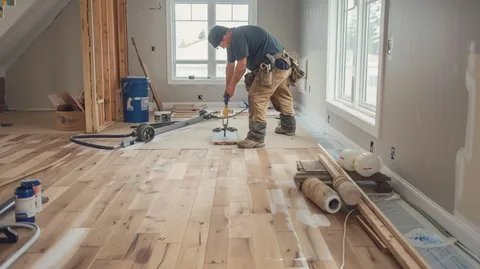
Need floor installation in Rocklin? Learn about flooring types, costs, what installation involves, and how to find a reliable local flooring contractor near you.
New flooring changes how a home feels more than almost any other upgrade. Walk into a room with fresh hardwood or well-laid tile and the whole space feels different — cleaner, more finished, more like home. Walk into the same room with worn carpet or cracked vinyl and the opposite impression lands immediately.
Rocklin homeowners invest in floor installation for all kinds of reasons. Some are updating a tired-looking room. Others are replacing flooring that has reached the end of its functional life. Some are prepping a home for sale and know that new floors return their cost many times over in buyer appeal. Whatever the reason, the quality of the installation matters as much as the material chosen.
A beautiful floor poorly installed is a floor that starts causing problems within a year. Boards that weren’t properly acclimated before installation will cup or gap when the seasons change. Tiles with inconsistent mortar coverage will crack under foot traffic. Luxury vinyl installed over an uneven subfloor will pop and flex every time someone walks across it. Getting the installation right is what separates a floor that looks good for twenty years from one that needs attention far too soon. AtCapital Carpentry, we install floors for Rocklin homeowners across a full range of materials and spaces, and we want every homeowner to understand what quality floor installation looks like before they commit to any project.
Why Rocklin’s Climate Affects Flooring Choices and Installation
Rocklin sits in Placer County at the edge of the Sacramento Valley, and the climate here has specific implications for flooring that homeowners in more moderate climates don’t always account for.
Summer temperatures regularly push above 100°F, and indoor humidity drops significantly during the dry season. Winter brings cooler temperatures and higher moisture levels. This seasonal swing creates expansion and contraction cycles in wood-based flooring that, if not managed correctly at installation, leads to gapping in dry months and cupping or buckling in wet ones.
Solid hardwood flooring requires careful acclimation to the indoor environment before installation — typically four to seven days in the room where it will be installed, with the HVAC system running normally. Installers who skip or rush this step are setting up a floor that will move seasonally in ways the installation can’t accommodate. Engineered hardwood handles seasonal movement better than solid wood, which is one reason it’s often the better choice for Rocklin’s climate.
Tile and stone flooring are more dimensionally stable but require a flat, solid subfloor to perform well. Rocklin’s temperature swings can cause slight movement in wood subfloors, and tile installed without proper surface preparation and adequate mortar coverage will eventually crack at the joints or along the tiles themselves.
Luxury vinyl plank, one of the fastest-growing flooring choices in California, has its own temperature considerations. Most LVP manufacturers specify installation and storage temperature ranges, and products left in a hot garage before installation or installed in a space that gets very hot can buckle or develop permanent curves in the planks. A professional installer knows these requirements and manages the product accordingly.
Flooring Types Rocklin Homeowners Commonly Choose
Each flooring material has a different performance profile, cost range, and installation requirement. Understanding the main options helps you make a choice that fits your home, your lifestyle, and your budget.
Solid hardwood is the premium choice for Rocklin homes where appearance and long-term value are the priorities. It can be sanded and refinished multiple times over its life, lasts for generations, and adds real value to a home at resale. The trade-offs are higher cost, sensitivity to moisture and temperature changes, and the need for careful acclimation and installation.
Engineered hardwood uses a real wood veneer over a plywood or HDF core that’s more dimensionally stable than solid wood. It handles Rocklin’s seasonal climate swings better than solid wood and can be installed in more locations — including over concrete slabs and in rooms with mild moisture exposure. It’s available in the same species and finishes as solid hardwood.
Luxury vinyl plank (LVP) and luxury vinyl tile (LVT) have become dominant in the mid-range market. They’re waterproof, highly durable, comfortable underfoot, and available in realistic wood and stone looks. LVP can be installed in kitchens, bathrooms, and laundry rooms where solid wood cannot. The quality range is wide — thicker wear layers and more rigid cores perform significantly better over time than thinner budget products.
Tile flooring — ceramic, porcelain, or natural stone — is the right choice for high-moisture areas, outdoor transitions, and anywhere that durability under heavy foot traffic is the priority. Porcelain tile in particular is extremely durable and available in large formats that create clean, contemporary looks. Installation quality matters more with tile than almost any other flooring type.
Carpet remains the most comfortable and acoustically quiet flooring option for bedrooms. Modern carpet products are more stain-resistant and durable than older generations, and the installation is less complex than hard surface flooring. Pad selection matters significantly for both comfort and longevity.
What Floor Installation Actually Involves
Understanding what a professional floor installation covers from start to finish helps you evaluate whether a contractor is doing complete work.
Subfloor preparation is the step that most directly affects how the finished floor performs. Every flooring type requires a subfloor that meets specific flatness standards. For LVP, most manufacturers require no more than 3/16 inch variation over 10 feet. For tile, the standard is typically 1/8 inch over 10 feet. High spots need to be ground down. Low spots need to be filled with floor leveling compounds. Squeaky areas need to be secured. A contractor who installs over an unprepared subfloor is taking a shortcut that shows up in the finished floor within months.
Moisture testing matters for any flooring installed over a concrete slab or in rooms with potential moisture exposure. Excessive moisture vapor from a concrete slab can cause adhesive failure in glue-down flooring, swelling in wood products, and mold growth under carpet. A professional installer tests for moisture and addresses any issues before flooring goes down.
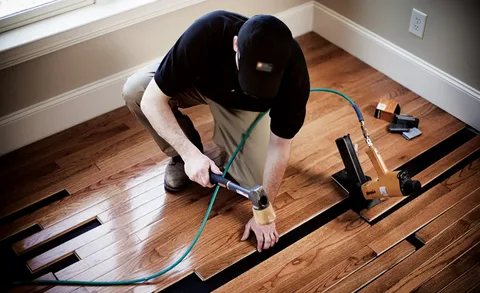
The installation itself varies by material. Hardwood is nailed or stapled through the tongue of each board to a wood subfloor. LVP clicks together with a floating installation that doesn’t attach to the subfloor. Tile is set in mortar with consistent spacing and leveled as it goes. Carpet is stretched over tack strips and trimmed at the edges. Each method has specific requirements for spacing, layout planning, and pattern matching that affect the finished appearance.
Transitions, thresholds, and trim work complete the installation. The places where one flooring type meets another — doorways, stair nosings, changes in room level — need to be handled carefully both for appearance and for preventing trip hazards. Baseboards and quarter-round shoe molding cover the expansion gaps at the wall perimeter and give the floor a finished look.
Floor Installation Costs in Rocklin
Realistic cost expectations protect you from low bids that skip preparation steps and from being overcharged for standard work.
| Flooring Type | Material Cost (per sq ft) | Installation Labor (per sq ft) | Typical Total Installed |
| Solid hardwood | $5 – $12 | $4 – $8 | $9 – $20 per sq ft |
| Engineered hardwood | $4 – $10 | $3 – $6 | $7 – $16 per sq ft |
| Luxury vinyl plank | $2 – $7 | $2 – $5 | $4 – $12 per sq ft |
| Porcelain tile | $3 – $10 | $6 – $12 | $9 – $22 per sq ft |
| Carpet | $2 – $6 | $1 – $3 | $3 – $9 per sq ft |
| Subfloor prep (if needed) | — | $1 – $4 | Added to total |
Homeowners looking for best hardwood floor contractors in Rocklin should get written estimates that separate material cost, installation labor, and subfloor preparation work so they can compare proposals accurately and understand exactly what they’re paying for.
How to Choose the Right Flooring for Each Room in Your Rocklin Home
The best flooring choice varies by room, and matching the material to the space’s specific demands is one of the most practical decisions in any floor installation project.
Kitchens and bathrooms need waterproof or highly water-resistant flooring. LVP and porcelain tile are the two strongest choices for these spaces. Solid hardwood is not recommended for kitchens or bathrooms where spills and humidity are regular occurrences. Engineered hardwood in a kitchen is acceptable with careful maintenance but not ideal in bathrooms.
Expert Floor installation in Rocklin homes typically sees the highest return on investment in main living areas — living rooms, dining rooms, and open-plan spaces — where hardwood or high-quality LVP creates the visual impact that buyers and residents notice most. These are the spaces where spending more on material quality pays back most visibly.
Bedrooms are where carpet still earns its place. The softness underfoot, the warmth, and the acoustic dampening that carpet provides are genuine quality-of-life advantages in sleeping spaces. High-traffic bedroom hallways often benefit from hard surface flooring, while bedroom interiors stay comfortable with carpet.
Home offices and bonus rooms are flexible. LVP works well in these spaces for durability and easy maintenance. Carpet is comfortable for spaces where you’re seated at a desk for long periods. The choice comes down to personal preference and how the room will be used.
How to Find a Qualified Floor Installation Contractor in Rocklin
California requires flooring contractors performing work above certain contract thresholds to hold a CSLB license — typically under a C-15 (Flooring and Floor Covering) or B (General Building) classification. Verify any contractor’s license status through the CSLB’s online database before signing anything.
Ask specifically about their subfloor preparation process. A contractor who addresses this question in detail — explaining how they check for flatness, what they use to fill low spots, and how they handle squeaks — is demonstrating knowledge that directly affects how your floor will perform. One who says they’ll just install over whatever is there is telling you they skip this step.
Get references from recent floor installation projects in Rocklin or the surrounding area. Ask specifically about how the floors have held up since installation and whether any problems developed in the first year. A floor that looks good on day one but develops gaps, squeaks, or lifting within a season reflects poor installation technique that references will tell you about.
Get written estimates that break out material and labor separately, specify the exact product being installed, and include subfloor preparation in the scope. Ask what happens if unexpected subfloor damage is found during installation — a professional contractor has a clear process for handling scope changes rather than just adding charges at the end.
Closing Thoughts
Floor installation is one of the most impactful upgrades a Rocklin home can receive. The right floor in the right room, installed correctly, changes how the space looks and feels every single day. Getting it right means choosing material that fits the room’s demands, preparing the subfloor properly, and working with a contractor who takes the technical side of the installation as seriously as the visible finish.
For any homeowner in Rocklin planning a flooring project — whether it’s one room or the whole house — the time spent finding a contractor with the right credentials, real local references, and a clear written scope is time that pays back in a floor that performs the way it should for years.
Capital Carpentry serves Rocklin and the surrounding Placer County area with professional floor installation across all major flooring types. Call us today for a free estimate and an honest assessment of what your project requires.
FAQs
How long does floor installation take in Rocklin CA? Timeline varies significantly by flooring type and room size. A standard 200 to 300 square foot bedroom with LVP installation typically takes one day including subfloor prep, installation, and trim work. Hardwood floors in the same size room take longer — often two days — when proper acclimation time is accounted for, and the wood needs to sit in the room for four to seven days before installation begins. Tile installation takes more time per square foot than other flooring types given the mortar setting and grout curing requirements — a standard kitchen floor typically takes two to three days from start to finished grout. Whole-house flooring projects covering multiple rooms and material types can run one to two weeks. Material lead time is a separate consideration — stock products are often available within a few days, while special-order or custom materials may take two to six weeks.
Do I need to remove my furniture before floor installation in Rocklin? Yes — the floor area needs to be completely clear before installation begins. Most professional flooring contractors do not move furniture as part of their standard installation scope, though some offer it as an add-on service. Heavy items like pianos, pool tables, and built-in furniture need to be addressed before scheduling the installation date. Appliances in kitchens and laundry rooms typically need to be moved as well, though your installer should advise you specifically on what needs to happen for your project. For whole-house projects, having a plan for where furniture will be staged during the work — a garage, a storage unit, or rooms being done last — is worth sorting out before the project starts.
Does new flooring need to acclimate before installation in Rocklin? Solid and engineered hardwood flooring needs to acclimate to the indoor environment before installation — typically four to seven days in the room where it will be installed, with the HVAC system running at normal temperatures and humidity. This allows the wood to reach a moisture content that matches the conditions it will live in, reducing the seasonal movement after installation. LVP does not require acclimation in the same way, but it should not be stored in a hot garage or vehicle before installation — it needs to be at room temperature before being worked with. Tile and carpet do not require acclimation. Ask your installer specifically about the acclimation requirements for the product they’re recommending — a contractor who doesn’t bring up acclimation for hardwood or engineered wood is skipping a step that matters for long-term performance.
What is the best flooring for homes with pets in Rocklin CA? Pets create specific demands on flooring — scratch resistance, moisture resistance, and ease of cleaning all matter more in pet households than in others. Luxury vinyl plank with a thick wear layer is one of the strongest choices for pet owners — it’s waterproof, resists scratches better than most wood products, and cleans easily. Porcelain tile is similarly durable and easy to maintain. Solid hardwood scratches more readily from pet nails than LVP or tile, though harder species like hickory and white oak hold up better than softer options like pine or walnut. Engineered hardwood falls between solid wood and LVP in scratch resistance. Carpet in pet households needs to be a stain-resistant product with a tight loop or cut pile that doesn’t snag on claws. For Rocklin homes with multiple pets or large dogs, LVP is typically the most practical balance of durability, appearance, and cost.
How do I maintain new floors after installation in Rocklin? Maintenance requirements vary by flooring type. Hardwood floors should be swept or dust-mopped regularly to remove grit that acts as sandpaper under foot traffic. Clean with a hardwood-specific cleaner — not steam mops or wet mops that introduce moisture. Apply a refresher coat every few years and a full sand-and-refinish every ten to fifteen years depending on wear. LVP requires sweeping and occasional mopping with a manufacturer-approved cleaner — avoid abrasive scrubbers that damage the wear layer. Tile should be swept and mopped regularly; grout lines benefit from periodic sealing to prevent staining. Carpet should be vacuumed weekly and professionally cleaned once a year or more in high-traffic homes. For all flooring types, placing entry mats at exterior doors to catch grit before it reaches the floor surface is one of the most effective ongoing maintenance habits that costs nothing and extends the floor’s life significantly.