

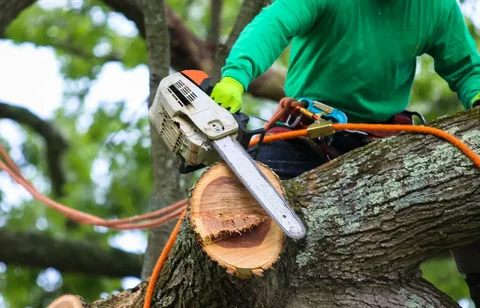
Need tree trimming services in Granite Bay? Learn about trimming types, costs, safety tips, and how to find a trusted local tree care professional near you.
A well-maintained tree is one of the most attractive features a property can have. Mature oaks, ornamental flowering trees, and shade trees along a fence line all add character and value to a Granite Bay home. But trees that haven’t been trimmed in years tell a different story — overgrown canopies blocking light, dead limbs hanging over rooflines, and branches rubbing against the house or interfering with power lines.
Tree trimming is one of those maintenance tasks that homeowners often put off longer than they should. It feels like a project for later, until a winter storm drops a heavy branch through the fence or onto the car. At that point, the cost of not trimming is suddenly very clear.
Granite Bay has a distinctive combination of mature residential trees, fire-prone hillside properties, and strict HOA standards in many of its communities. Getting tree trimming done right here requires more than just someone with a chainsaw. It requires someone who understands tree health, proper pruning techniques, and the specific considerations that come with properties in the Sierra Nevada foothills. AtCapital Carpentry, we work with Granite Bay homeowners on outdoor property maintenance including tree trimming, and we want you to understand what professional tree care actually looks like before you hire anyone.
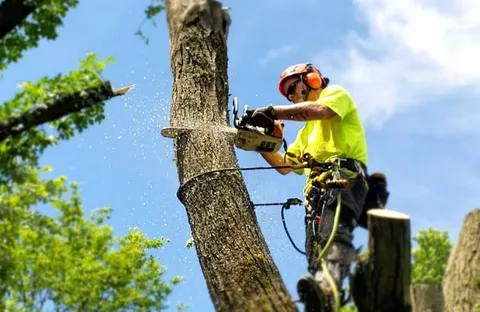
Why Tree Trimming Matters More in Granite Bay Than Most Areas
Granite Bay sits in Placer County in the Sierra Nevada foothills, and the combination of climate, vegetation, and fire risk here creates specific tree care requirements that homeowners in flatter, wetter parts of California don’t face to the same degree.
Fire risk is a real concern in this part of Placer County. CAL FIRE designates much of the Granite Bay area as a High or Very High Fire Hazard Severity Zone. Defensible space requirements under California Public Resources Code 4291 require homeowners to maintain vegetation within 100 feet of their structures. Dead branches, dry wood, and overgrown canopies that hang close to rooflines increase fire risk significantly. Regular tree trimming is one of the most effective ways to reduce that risk while keeping mature trees healthy and intact.
Wind events also move through the foothills regularly. Branches that look stable in calm conditions can fail when a Diablo wind comes through in fall or a winter storm brings sustained gusts. An arborist who assesses your trees for structural weaknesses — not just cosmetic overgrowth — can identify the branches most likely to cause damage before they do.
According to the Tree Care Industry Association, improperly trimmed trees are more susceptible to disease, structural failure, and pest infestation than trees that receive regular, correctly executed pruning. For Granite Bay homeowners with significant mature trees on their properties, professional trimming isn’t just maintenance — it’s an investment in trees that can take decades to replace.
Types of Tree Trimming Services and What Each One Does
Not all tree trimming is the same, and knowing the different types helps you communicate clearly with a contractor and understand what’s being proposed for your trees.
Crown cleaning removes dead, dying, and diseased branches from the tree’s canopy. This is the most common trimming service and the foundation of good tree health maintenance. Clean crowns reduce the weight of dead wood, improve airflow through the canopy, and eliminate the entry points that disease and pests use to get into healthy wood.
Crown thinning selectively removes live branches throughout the canopy to reduce density and allow more light and air movement through the tree. Thinning is most often done on trees that have become too dense, on properties where shade is affecting lawns or gardens below, or on trees that need better structural balance.
Crown raising removes lower branches to increase clearance between the ground and the canopy. This is commonly done to clear branches over walkways, driveways, and rooflines, or to create a more open view. Raising should be done gradually — removing too many lower branches at once stresses the tree and can affect its ability to photosynthesize efficiently.
Crown reduction reduces the overall size of the canopy by cutting back the outermost branch tips. This is often done when a tree has grown too close to a structure, power line, or neighboring property. Done correctly, it maintains the tree’s natural shape. Done incorrectly — by topping, which cuts branches back to stubs — it causes long-term structural damage and disease entry.
Deadwooding specifically targets and removes dead branches throughout the tree, regardless of their location in the canopy. This is a safety-focused service that reduces the risk of branch failure and is particularly important for trees over structures and in areas with fire risk.
What to Expect From a Professional Tree Trimming Job
Understanding what a well-executed tree trimming service looks like helps you recognize quality work and spot shortcuts.
The first step is a tree assessment. A professional arborist or tree trimming specialist walks the property, evaluates each tree’s structure and health, identifies problem areas, and discusses the goals for each tree with the property owner. This assessment shapes the trimming plan — which branches to remove, how much to reduce, and what to leave alone.
Proper cutting technique matters more than most homeowners realize. Every cut should be made at a branch collar — the slightly raised ring of tissue where a branch meets the trunk or parent branch — not flush with the trunk and not leaving a long stub. Cuts made at the collar allow the tree to form a protective callus over the wound site. Flush cuts and stubs create entry points for rot and disease that can compromise the tree’s long-term health.
Clean, sharp tools are non-negotiable for professional tree trimming. Dull tools crush and tear wood rather than cutting cleanly, leaving ragged wound sites that are slower to heal and more susceptible to disease. Reputable trimming companies sharpen and sanitize their tools between trees to prevent spreading disease from one tree to another.
Cleanup is the final step that distinguishes professional service from casual labor. All cut branches, leaves, and wood debris should be removed from the property or chipped on-site. Leaving a pile of cut wood and brush at the edge of the yard is not an acceptable finish for a professional job.
What Tree Trimming Costs in Granite Bay
Having a realistic sense of what tree trimming costs in this area helps you evaluate proposals fairly and recognize when something is priced too low to include the work that actually needs to happen.
| Tree Size | Typical Trimming Cost | Notes |
| Small tree (under 25 ft) | $150 – $400 | Most ornamental and young trees |
| Medium tree (25–50 ft) | $400 – $800 | Common residential shade trees |
| Large tree (50–80 ft) | $800 – $1,500 | Mature oaks, larger pines |
| Very large tree (80 ft+) | $1,500 – $3,000+ | Significant equipment required |
| Deadwooding only | $100 – $500 | Depends on tree size and branch count |
| Multiple tree discount | Varies | Most companies discount for 3+ trees |
Homeowners looking for professional tree trimming services in Granite Bay should get written estimates that specify the scope of work for each tree — not just a per-visit total — so they know exactly what is being done and can compare proposals accurately.
Fire Safety and Tree Trimming in Granite Bay
For Granite Bay homeowners, fire defensible space requirements are not optional. California law requires property owners in designated fire hazard zones to maintain specific vegetation clearance around structures. Trees play a significant role in that requirement.
Within the first 30 feet from a structure (Zone 1), branches should not overhang the roof, and dead wood should be removed from all trees. Trees should be spaced so their canopies don’t touch or create a continuous ladder for fire to climb from the ground level up into the crowns. Within 30 to 100 feet (Zone 2), trees should be trimmed to remove dead branches and spaced to limit crown-to-crown fire spread.
A tree trimming professional familiar with CAL FIRE’s defensible space guidelines can assess your property specifically against those requirements, not just trim for appearance. Expert Tree trimming services in Granite Bay that include fire safety compliance work give homeowners both a healthier tree canopy and a property that meets California’s defensible space standards.
The Placer County Fire Safe Council offers resources for homeowners working on defensible space compliance, including checklists and guidance on what inspectors look for. Combining that guidance with professional tree trimming creates a property that is genuinely better prepared for fire season.
How to Choose a Tree Trimming Contractor in Granite Bay
California requires tree trimming contractors who operate as a business to hold a C-61/D-49 (Tree Service) license or a C-27 (Landscaping) license from the Contractors State License Board. Verify any contractor’s license status through the CSLB’s online database before signing anything.
ISA certification — from the International Society of Arboriculture — is the professional credential for arborists. An ISA Certified Arborist has demonstrated knowledge of tree biology, proper pruning techniques, and tree health assessment. Not every tree trimmer needs to be a certified arborist, but for significant trees or complex trimming situations, having a certified arborist involved in the assessment and planning is worth asking about.
Ask specifically about their approach to pruning cuts. A contractor who can explain the branch collar concept and why proper cut placement matters is operating with professional knowledge. One who says they’ll “just take it back” without any discussion of technique is not someone you want making cuts on a mature oak or valued ornamental tree.
Get written estimates that describe the work to be done on each tree. References from recent jobs in Granite Bay or the surrounding area are worth following up on — local experience with Placer County’s tree species and conditions is genuinely relevant.
Closing Thoughts
Tree trimming in Granite Bay is both a property maintenance task and a safety measure. The combination of fire risk, wind exposure, and the value of mature trees on hillside properties makes professional, properly executed trimming more important here than in many other residential areas.
For any homeowner in Granite Bay who has been putting tree maintenance off, fire season is the most important deadline to work toward. Getting trees assessed and trimmed before the dry months arrive reduces risk, keeps trees healthier, and keeps your property in compliance with California’s defensible space requirements.
Capital Carpentry serves Granite Bay and the surrounding Placer County area with professional tree trimming and outdoor property maintenance. Call us today for a free estimate and a straightforward assessment of what your trees actually need.
FAQs
How often should trees be trimmed in Granite Bay CA? Most healthy, established trees in Granite Bay benefit from professional trimming every two to three years. Trees that grow quickly, trees close to structures, and trees in fire hazard zones may need annual attention. Ornamental trees that are pruned for a specific shape may need trimming once or twice a year. The right frequency depends on the species, the tree’s growth rate, its location on the property, and the specific goals — whether that’s fire safety compliance, structural health, or appearance. After the initial trim that addresses any backlog of overgrowth or dead wood, a regular maintenance schedule is typically less work and less expensive per visit than letting trees go for many years and then doing a major cleanup. A professional assessment after the first trimming can give you a realistic recommendation for your specific trees.
Is tree topping a good way to reduce the size of a large tree in Granite Bay? No — topping is widely considered the most harmful pruning practice in professional arboriculture. When a tree is topped, large branches are cut back to stubs or to lateral branches that are too small to take over the terminal role. The result is rapid, weakly attached regrowth that’s more susceptible to breakage than the original branches, plus large wound sites that are slow to close and create entry points for rot and disease. The International Society of Arboriculture explicitly advises against topping as a tree size reduction method. The correct approach is crown reduction — selectively cutting back to appropriate lateral branches that can sustain the reduced canopy — which achieves a smaller tree without the structural damage that topping causes. If a contractor recommends topping as the solution for an overgrown tree, that’s a clear signal to get a second opinion.
Do I need a permit to trim trees in Granite Bay CA? In most cases, permits are not required for routine tree trimming on private residential property in unincorporated Placer County. However, some tree species are protected under local or state regulations — certain heritage oaks, for example, may require a permit before significant trimming or removal. If your property is in an HOA community, your HOA may have rules about tree trimming that require approval before work begins. If the trees are near power lines, the utility company’s requirements apply and trimming near those lines should only be done by utility-qualified crews. Check with Placer County and your HOA before any significant tree work, particularly if the trees are large, old, or close to property lines.
What is the difference between tree trimming and tree pruning? The terms are often used interchangeably, but there is a practical distinction. Tree trimming typically refers to cutting back overgrown branches to maintain a desired shape or size — it’s primarily about appearance and keeping growth in check. Tree pruning is a more targeted practice focused on the tree’s health and structure — removing dead, diseased, or structurally weak branches to improve the tree’s long-term condition. In practice, most professional tree care jobs involve elements of both. A good tree care professional assesses each tree for both appearance needs and structural health, and the work they do addresses both. When getting estimates, ask whether the contractor’s scope includes removing dead wood throughout the canopy, not just trimming visible overgrowth — the answer tells you whether they’re doing the full job or just the part that’s easiest to see from the ground.
How do I know if a tree on my Granite Bay property is a safety risk? Several visible signs indicate a tree may pose a structural risk worth having assessed by a professional. Dead branches in the upper canopy — those with no leaves during the growing season or visibly dry, gray wood — are the most obvious concern. Cracks or splits in the trunk or at major branch unions indicate structural weakness. Fungal growth at the base of the trunk or on the root flare suggests internal decay. Trees that lean more than they used to, or that have lifted soil on the uphill side of the root ball, may be losing their anchor. Branches that rub against the roof, hang over the house, or cross power lines create ongoing risk even without visible structural problems. If you’re unsure about a specific tree, an ISA Certified Arborist can assess it and give you an honest evaluation of whether proactive trimming, cabling, or removal is the right course of action.