
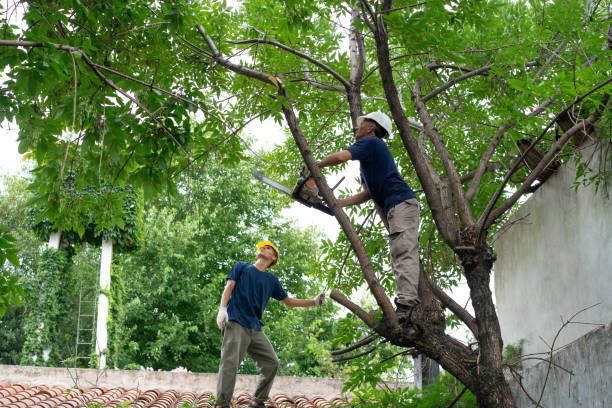
Why Residential Tree Trimming Matters for Granite Bay Properties
Granite Bay sits in the heart of Placer County, where mature oaks, pines, and ornamental maples shade some of the region’s most desirable neighborhoods. Those trees are assets but only when they’re properly maintained. Residential tree trimming is one of the most practical things you can do to protect your home, your landscaping investment, and the safety of everyone on your property.
Neglected trees grow heavy, unbalanced branches. They encroach on rooflines, crowd power lines, and drop deadwood without warning. In a county where fire risk and drought stress are real seasonal concerns, overgrown canopies can turn a beautiful yard into a liability fast.
This guide covers everything Granite Bay homeowners need to know: the types of trimming available, what a professional job actually looks like, what it costs locally, and how to find a contractor who will do it right the first time.
Why Granite Bay homeowners prioritize tree care services
The trees common to the Granite Bay area valley oaks, blue oaks, ponderosa pines, and ornamental maples large and fast. Granite Bay’s warm, dry summers followed by wet winters create conditions that stress trees in ways many homeowners don’t notice until something goes wrong.
Drought stress weakens wood structure. Wet winters then put enormous load on branches that were already compromised. The result is a higher risk of limb failure, especially over driveways, patios, and structures.
Property value is another motivating factor. According to Penn State Extension (2021), landscape trees can increase property value by up to 7 percent but only when those trees are healthy and well-maintained. A tree with visible deadwood, crossing branches, or a dangerously wide canopy doesn’t add value. It adds concern.
Then there is fire safety. Placer County’s defensible space guidance calls for maintaining and thinning trees within 100 feet of your home. Regular and Professional tree maintenance removing dead branches, reducing canopy density, and keeping vegetation from touching your roofline is part of meeting that standard, not an optional add-on.
Types of tree trimming and which method fits your trees
Not every tree needs the same type of work, and not every trimming method suits every situation. Understanding the options helps you have a better conversation with any contractor you bring in.
Crown thinning
Removes selected interior branches to improve light penetration and air circulation throughout the canopy. It reduces wind resistance, which lowers the chance of storm damage. This method works especially well for large oaks that have grown dense over many years.
Crown reduction
Shortens the overall height or spread of a tree by cutting back to strong lateral branches. Done correctly by a trained arborist, it preserves the tree’s natural shape. Done incorrectly by topping, which is cutting the main leaders without regard to structure it causes lasting damage. Vincent Cotrone, Extension Educator in Urban Forestry at Penn State, explains that tree topping opens large wounds that don’t close properly, invites decay organisms, and leads to weakly attached water sprouts that break in future storms. Avoid any contractor who lists topping as a standard service.
Crown raising
Removes the lower branches of a tree to create clearance for vehicles, foot traffic, structures, or sightlines. This is common for street-facing trees on Granite Bay properties where lower limbs hang over driveways or walkways.
Deadwood removal
Targets dead, dying, or structurally compromised branches. This is sometimes called crown cleaning. It is one of the safest and most straightforward types of branch removal for landscape trees, and it can be done at almost any time of year.
Tree shaping and canopy management
Covers ornamental work keeping decorative trees proportional, directing growth away from structures, and maintaining the visual character of a property’s landscape.
| Service Type | Typical Use | Average Local Cost (Granite Bay) | Best For | Follow-up Needs |
| Crown thinning | Dense, mature shade trees | $300 – $700 per tree | Oaks, maples, large ornamentals | Every 3 to 5 years |
| Crown reduction | Overgrown trees near structures | $400 – $900 per tree | Pines, large oaks near buildings | Every 3 to 7 years |
| Crown raising / limb trimming | Clearance over driveways, paths | $200 – $500 per tree | Street-side and entry trees | Every 2 to 4 years |
| Deadwood removal | Safety and health maintenance | $150 – $400 per tree | All species, especially oaks | Annual or biennial |
| Tree shaping / vista pruning | Aesthetics and sightlines | $200 – $600 per tree | Ornamentals, small accent trees | Seasonal or annual |
What a professional tree trimming job actually looks like
Many homeowners aren’t sure what they’re paying for when a crew shows up. Here’s what a proper job involves, from start to finish.
Assessment first
A qualified arborist walks the property before any cuts are made. They check for signs of disease, pest activity (bark beetle damage is a known issue in Placer County pines), structural defects, and proximity to utility lines or structures. PG&E and other utilities manage their own line clearance, but a good arborist will flag any branches within range of 10 feet of electrified lines and coordinate accordingly.
Planning the cuts
The arborist identifies which branches to remove and which to keep. Cuts are made just outside the branch collar the swollen area where a branch meets the trunk. Preserving the branch collar is what allows the tree to seal the wound. Flush cuts that remove the collar leave the wound open to decay.
Seasonal timing matters
The late dormant season late winter to early spring is the best window for most trimming in the Granite Bay area, as the University of Minnesota Extension’s pruning guidance confirms for comparable climates. For oaks, timing is especially critical: pruning between April and October risks spreading oak wilt disease, so dormant-season work is strongly preferred.
The actual trimming
For large limbs, a three-cut technique prevents bark tearing. The crew makes a relief cut on the underside of the branch first, then a second cut further out to remove the bulk of the weight, then a final clean cut at the branch collar. Chainsaws, pole saws, and hand pruners are each used depending on branch diameter and location.
Cleanup and debris handling
A professional job includes removing all cut material from the site. Some contractors chip branches on-site and offer the mulch back to you which has real value for Granite Bay gardens. Ask upfront whether debris removal is included in the quote or billed separately.
What drives tree trimming costs in Granite Bay
Several factors affect what you’ll pay for residential tree trimming in this area. Knowing them helps you evaluate bids accurately.
Tree size and species are the biggest variables. A 30 foot ornamental maple costs far less to trim than a 60-foot valley oak with a wide canopy. Pines with crown decay or significant deadwood require more careful work.
Access plays a large role. Trees over structures, close to fences, or on slopes require more setup time and sometimes specialized equipment like an aerial lift. Tight access adds cost.
The number of trees in one visit affects per-tree pricing. Most contractors price more competitively when several trees are scheduled at once a useful consideration for Granite Bay properties with mature landscaping.
The scope of work matters too. Seasonal tree trimming that keeps trees maintained year to year is less expensive per visit than corrective work on a badly overgrown tree that hasn’t been touched in ten years.
Are permits required? Under Placer County Code Section 19.50 and the County’s Tree Preservation Ordinance, a Tree Permit may be required before removing protected native trees defined as native trees with a trunk diameter of 6 inches at breast height or greater, or multi-trunk trees with an aggregate diameter of 10 inches near development activity. Routine trimming and pruning of healthy trees on an established residential property generally does not require a permit, but removal of protected trees does. If you’re planning construction alongside tree work, check with Placer County’s Planning Services Division before proceeding.
How to choose the right tree care provider in Granite Bay
What separates a qualified tree care professional from someone who owns a chainsaw and a truck? A few things matter a lot.
Ask whether they hold ISA Certified Arborist credentials. The International Society of Arboriculture certification requires passing a rigorous exam on tree biology, pruning standards, and safety. It’s not required to legally do tree work in California, but it tells you the person understands what a branch collar is and why it matters.
Get a written quote that specifies the pruning objectives, which trees are being worked, what type of cuts are being made, and what cleanup is included. If a contractor only gives you a number with no detail, that’s a red flag.
Ask for proof of liability insurance and workers’ compensation coverage. Tree work near structures and overhead lines is inherently risky. A general landscaper or unlicensed handyman who doesn’t carry trade-specific coverage leaves you exposed to liability if something goes wrong on your property.
Companies that specialize in Residential tree trimming for Granite Bay properties like capital-carpentry. understand the local species, the Placer County fire safety guidelines, and the seasonal timing that protects oaks from disease exposure. That’s a meaningful difference from a general contractor who treats tree work as an upsell.
Ask for references and look at trees they’ve worked on. Properly pruned trees retain their natural form. You should see no large stubs, no stripped interior branches (called lion-tailing), and no signs of bark damage from climbing spurs.
Conclusion
Tree work is one of those things that costs less when done regularly and far more when deferred. If your Granite Bay property has mature oaks, pines, or ornamentals that haven’t been assessed in the last few years, this is a reasonable time to schedule an inspection. Reach out to capital-carpentry. to discuss what your trees actually need a straight forward look at your canopy, any safety concerns, and a clear written quote with no guesswork. Good tree care doesn’t have to be complicated.
FAQ’s
How often should trees be trimmed on a Granite Bay residential property?
Most mature shade trees in Granite Bay benefit from trimming every 3 to 5 years. Younger trees or fast-growing species may need attention every 2 to 3 years to establish good structure. Annual inspections by an arborist are worthwhile regardless of whether full trimming is needed small corrections made early prevent expensive corrective work later.
What time of year is best for tree trimming in Placer County?
Late winter to early spring is the preferred window for most species, when trees are dormant and wounds heal quickly once growth resumes. For oaks, avoiding the April through October period is strongly recommended to reduce oak wilt risk. Some work, like deadwood removal, can be done year-round with minor precautions.
Does residential tree trimming in Granite Bay require a permit?
Routine pruning and trimming of healthy trees on your property does not require a permit. Removal of protected native trees those meeting size thresholds under Placer County Code Section 19.50 does require a Tree Permit from Placer County’s Planning Services Division. If your project involves grading, construction, or significant tree removal near development activity, review the county’s Tree Preservation Ordinance before starting.
How much does professional tree trimming cost in Granite Bay?
Typical costs range from $150 to $900 per tree depending on size, species, access, and scope of work. A small ornamental tree requiring basic shaping might cost $150 to $300. A large mature oak with significant crown work, aerial access, and debris removal can run $500 to $900 or more. Getting two or three written quotes for the same scope of work is the most reliable way to assess fair pricing.
What is the difference between crown thinning and crown reduction?
Crown thinning selectively removes branches from within the canopy to improve light and airflow without changing the tree’s overall size. Crown reduction shortens the height or spread by cutting back to strong lateral branches. Thinning is generally less stressful for the tree. Reduction is used when a tree has grown too close to a structure or utility line and needs its footprint reduced.
Why is tree topping harmful, and should I ever request it?
Tree topping removes the main leaders and large upper branches, leaving large stubs that don’t close properly. The stubs decay, weakly attached water sprouts grow back quickly, and the tree becomes more hazardous than before. Penn State Extension (2024) describes topping as the most serious injury you can inflict on a tree. Proper crown reduction using lateral cuts achieves size management without causing structural damage.