

Thinking about new floors in Granite Bay CA? Here’s a real look at the perks, costs, and why pro install matters long-term.
New flooring is one of those projects that completely changes how a house feels. Walk into a room with old, scratched-up floors and the whole space looks tired. Walk into the same room with fresh hardwood, clean tile, or quality laminate, and suddenly everything else looks better too. The cabinets seem cleaner. The paint looks fresher. The room feels bigger.
A lot of Granite Bay homeowners think about flooring as a DIY weekend project. Some of it can be. But the real benefits — the kind that pay back for 20 to 30 years — usually come from professional installation. The difference shows up in how the floor sits, how it sounds underfoot, and how long it lasts before something goes wrong.
So today we want to walk through the real benefits of professional flooring installation — what you actually get for the extra cost, and why it matters more in our local climate than folks realize. If you’re starting to think about new floors, Capital Carpentry has been doing flooring and carpentry work across the Sacramento area for years and we know what holds up in homes like yours.
Why Flooring Choices Matter More Here
Quick context first. Granite Bay sits in the Sierra foothills, which means hot summers, cold winters, and big humidity swings throughout the year. That climate matters way more for flooring than most folks realize.
Wood expands and contracts with humidity. Tile cracks if subfloors aren’t prepped right. Laminate warps if water gets underneath. The flooring choices that work great in coastal California don’t always work the same way here.
The Northern California Allergy Association notes that hard-surface flooring like hardwood, tile, and luxury vinyl helps reduce allergens compared to carpet. That matters for folks dealing with seasonal allergies — which is most of us out here during oak pollen season.
Have you ever pulled up old carpet and seen what was hiding underneath? That’s often a year’s worth of dust, dander, and other stuff your vacuum never reached. Hard floors don’t trap any of that.
Big Benefit #1: It Actually Lasts
The first real perk of professional installation is longevity. Done right, quality flooring lasts decades. Done wrong, even expensive flooring fails within years.
Hardwood floors installed properly should last 50 to 100 years with periodic refinishing. Tile installed on a proper subfloor lasts indefinitely. Laminate and luxury vinyl plank typically run 15 to 30 years.
A DIY install often cuts corners on prep work — subfloor leveling, moisture barriers, expansion gaps, transition strips. Each of those shortcuts shaves years off the floor’s life. Pros build all of this into every job because they know what fails.
Big Benefit #2: Real ROI at Resale
Money side matters. According to Remodeling Magazine’s Cost vs. Value report, new flooring consistently ranks among the highest-return home improvements, with hardwood install recovering 70% to 80% of cost at resale in the Pacific region.
Real estate agents in the Sacramento metro consistently rank updated flooring among the top three things buyers actually pay more for. Outdated carpet drags down listing prices. Worn vinyl makes a house look unmaintained.
Spending $8,000 on quality flooring usually adds $5,500 to $6,500 in appraised value. Not a money-maker on its own, but the daily use of better floors for the years you live there is the real win.
Big Benefit #3: Healthier Indoor Air
This one gets overlooked. Carpet traps allergens, dust, pet dander, and mold spores. Even with regular vacuuming, those particles stay embedded in fibers for years.
Hard-surface flooring releases trapped particles way more easily. A quick sweep or mop removes most of what builds up. Folks with allergies, asthma, or chemical sensitivities often see meaningful improvements after switching from carpet to hardwood or tile.
The EPA has published guidance on indoor air quality showing that hard-surface flooring contributes to better measurable air quality compared to carpeted spaces. Worth real consideration if anyone in your household deals with respiratory issues.
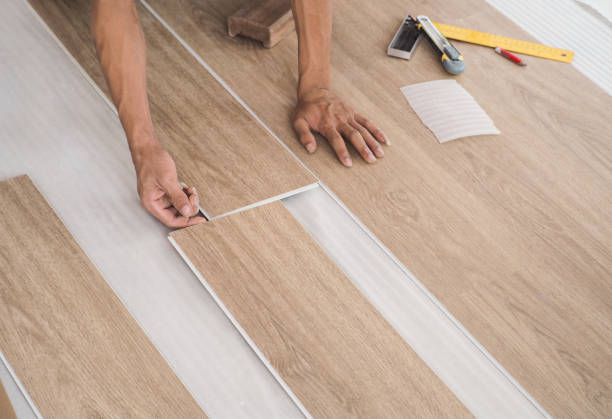
Flooring Type Comparison
Here’s a quick reference of the main flooring types for Granite Bay homes:
| Flooring Type | Cost Per Sq Ft (installed) | Lifespan | Best For |
| Engineered hardwood | $9 – $18 | 30+ years | Living areas, bedrooms |
| Solid hardwood | $12 – $25 | 50-100 years | Forever homes |
| Luxury vinyl plank | $5 – $10 | 20-30 years | High-moisture areas |
| Ceramic/porcelain tile | $8 – $20 | 50+ years | Kitchens, baths |
| Laminate | $4 – $8 | 15-25 years | Budget projects |
| Carpet | $4 – $9 | 8-15 years | Bedrooms only |
Most Granite Bay homes we work on land in the engineered hardwood or luxury vinyl plank brackets. They both handle our climate well and look great for years.
Big Benefit #4: Proper Subfloor Prep
Here’s the part of professional installation that nobody talks about but matters most. Before any new flooring goes down, the subfloor has to be flat, dry, and stable.
In older Granite Bay homes, subfloors often need work. We see warped plywood, gaps between sheets, squeaks from loose nails, and uneven areas where wood has dried out unevenly over decades. None of this shows from the surface, but it all causes problems with new flooring.
A pro install addresses all of this before the new floor goes down. Self-leveling compound for low spots. Replacement of damaged sheets. Re-screwing loose areas. Adding moisture barriers where needed.
A DIY install skips most of this because it’s invisible work that takes time. The new floor goes down on a bad foundation, and the problems show up six months later.
Big Benefit #5: Correct Expansion Gaps
Wood and laminate floors need expansion gaps around the perimeter. When humidity changes, the flooring expands and contracts. Without gaps, the floor pushes against the walls and buckles.
The right gap is usually 1/4 to 1/2 inch around all walls and obstacles. This gets covered by baseboards or quarter-round trim so you never see it. Skip the gap and you’ll have wavy floors within a year.
DIY installs frequently miss this step or get the measurements wrong. Pros build it into every job automatically.
For Granite Bay homeowners who want a flooring install that handles our local humidity swings, Professional Flooring Installation in Granite Bay is the kind of local service that knows what works here.
Big Benefit #6: Clean Transitions Between Rooms
Where one floor meets another — say, hardwood meeting tile at a kitchen doorway — is where bad installs really show up. Crooked lines. Visible gaps. Mismatched heights.
Pros use the right transition strips for each junction. T-molding for floors of similar height. Reducers for height differences. Threshold strips for doorways. The result is clean lines that look intentional rather than improvised.
This stuff sounds minor but adds up across a whole house. A 1,800 square foot remodel might have 8 to 12 transition points. Each one is a chance to either look good or look amateur.
Big Benefit #7: Warranty Protection
Most flooring manufacturers offer warranties between 10 and 50 years. The catch is that almost every warranty requires professional installation by a certified installer.
Install your own flooring and you usually void the warranty entirely. Then when something goes wrong, you’re on your own for repairs.
A professional install keeps the manufacturer warranty intact. If a board fails prematurely or the finish wears unevenly, you have real recourse to get it fixed or replaced.
A Granite Bay Story Worth Sharing
A family near Folsom Lake reached out to us a couple years back. They’d hired a “discount” installer to put in engineered hardwood across their 1,400 square foot main floor. The price had been about $6,800 — way below the typical range for the area.
Within 8 months, the floor had developed visible cracks at almost every joint, several boards had cupped, and the transition strips were starting to come loose. The original installer wasn’t returning calls.
We had to remove and replace about 60% of the floor. The subfloor had never been moisture-tested. No vapor barrier had been installed. Expansion gaps were almost nonexistent. Total cost to fix everything was about $9,200 on top of what they’d already paid.
If they’d done a proper $12,000 install from the start, they would have saved roughly $4,000 and avoided 6 weeks of stress. That’s the real cost of cheap flooring work.
Big Benefit #8: Speed and Cleanliness
A pro flooring crew gets jobs done way faster than DIY. A 1,500 square foot main floor that might take a homeowner three weekends of work runs about 3 to 5 days for a professional team.
They also keep the site clean. Drop cloths down. Tools organized. Debris hauled away daily. The end-of-day mess is minimal compared to what a DIY job leaves behind.
Wrapping It Up
Professional flooring installation gives you floors that last decades, raise home value, improve indoor air quality, handle climate swings, and come with real warranty protection. The upfront cost is higher than DIY, but the math works out in your favor over the lifespan of the floor. Skip cheap installers who cut corners on prep work. Pick a real crew that knows what holds up in Granite Bay’s climate. For homeowners ready to start a project, the Best Hardwood Floor Contractors in Granite Bay team is a strong place to begin the conversation.
FAQs
How long does professional flooring installation take?
For a typical 1,000 to 1,500 square foot main floor, plan on 3 to 5 days of on-site work. Smaller projects like a single room can wrap in 1 to 2 days. Whole-house jobs with multiple rooms might take 1 to 2 weeks. Material lead times vary — engineered hardwood and luxury vinyl plank usually have 1 to 3 week lead times, while custom or imported materials can run 6 to 12 weeks.
Can I live in my house during flooring installation?
Yes, but with limits. You’ll lose access to rooms being worked on during the install phase. Most crews work room by room so you can shift living patterns around the project. Dust and noise are real factors, especially during demo and subfloor prep. Many families choose to be away during the most disruptive parts. Plan to clear furniture and personal items from work areas before the crew arrives.
Do I need to remove my existing flooring before the install crew arrives?
Usually no — most professional installers handle demo and removal as part of the project. Some quote it as a line item so you can see the cost separately. If you want to save money by doing demo yourself, mention this upfront so it gets reflected in the quote. Watch out for nail strips, staples, and adhesives that can be tricky to remove cleanly.
Will new flooring really make my house look bigger?
Yes, especially if you use consistent flooring across multiple rooms. Breaking up flooring at every doorway makes a house feel chopped up. Running the same wood or vinyl through living, dining, and kitchen areas creates visual flow that genuinely makes spaces feel larger. Light-colored flooring also reflects more light and adds to the open feel. This is one of the smartest upgrades for homes that feel cramped.
What’s the best flooring for households with pets?
Luxury vinyl plank handles pets best for most Granite Bay homes. It’s scratch-resistant, waterproof, and easy to clean. Tile also works great but feels cold underfoot. Engineered hardwood with a tough finish like aluminum oxide can handle pets too but shows scratches more visibly than vinyl. Avoid solid hardwood and bamboo with pets unless you’re committed to regular maintenance and don’t mind some character marks.
For a typical 1,000 to 1,500 square foot main floor, plan on 3 to 5 days of on-site work. Smaller projects like a single room can wrap in 1 to 2 days. Whole-house jobs with multiple rooms might take 1 to 2 weeks. Material lead times vary — engineered hardwood and luxury vinyl plank usually have 1 to 3 week lead times, while custom or imported materials can run 6 to 12 weeks.
Yes, but with limits. You’ll lose access to rooms being worked on during the install phase. Most crews work room by room so you can shift living patterns around the project. Dust and noise are real factors, especially during demo and subfloor prep. Many families choose to be away during the most disruptive parts. Plan to clear furniture and personal items from work areas before the crew arrives.
Usually no — most professional installers handle demo and removal as part of the project. Some quote it as a line item so you can see the cost separately. If you want to save money by doing demo yourself, mention this upfront so it gets reflected in the quote. Watch out for nail strips, staples, and adhesives that can be tricky to remove cleanly.
Yes, especially if you use consistent flooring across multiple rooms. Breaking up flooring at every doorway makes a house feel chopped up. Running the same wood or vinyl through living, dining, and kitchen areas creates visual flow that genuinely makes spaces feel larger. Light-colored flooring also reflects more light and adds to the open feel. This is one of the smartest upgrades for homes that feel cramped.
Luxury vinyl plank handles pets best for most Granite Bay homes. It’s scratch-resistant, waterproof, and easy to clean. Tile also works great but feels cold underfoot. Engineered hardwood with a tough finish like aluminum oxide can handle pets too but shows scratches more visibly than vinyl. Avoid solid hardwood and bamboo with pets unless you’re committed to regular maintenance and don’t mind some character marks.